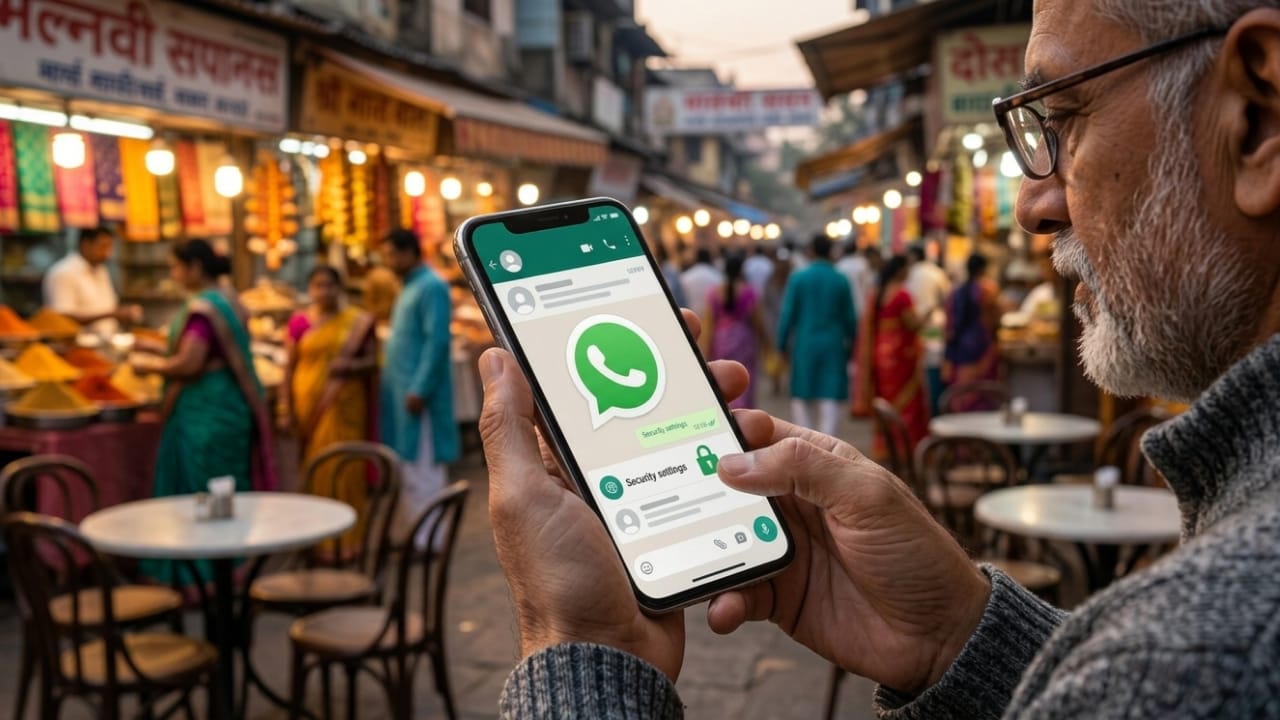
Most people believe WhatsApp is already secure. That’s partly true. Your chats are protected with encryption, which means messages stay private while being sent. But in reality, most modern scams don’t break security systems—they trick users instead.
That means your safety depends more on your habits and settings than you might think.
The good news? You don’t need technical knowledge to protect your account. With a few simple changes, you can make your WhatsApp much safer.
Here’s a clear and easy guide based on what actually works.
Also read: WhatsApp Spoiler Messages Feature: What It Is and How It May Work
1. Enable Two-Step Verification First
This is one of the most important settings.
Without it, anyone who gets access to your SMS code can log into your account. Two-step verification adds an extra PIN, which blocks unauthorized access.
How to turn it on:
- Open WhatsApp → Settings
- Tap Account → Two-step verification
- Create a 6-digit PIN
- Add a recovery email
Tips:
- Avoid simple PINs like 123456
- Always add an email for recovery
- Don’t store your PIN openly on your phone
This small step can prevent major problems later.
2. Never Share Your Verification Code
Your WhatsApp OTP is like a master key.
Scammers often pretend to be someone you know and ask for a code “by mistake.” In reality, they are trying to access your account.
Stay safe by following this:
- Never share your OTP with anyone
- Ignore such messages
- Block and report suspicious contacts
Even if the message looks real, always double-check before trusting it.
3. Check Linked Devices Regularly
WhatsApp allows you to use your account on other devices like laptops. But if someone connects their device, they can read your chats.
What to do:
- Go to Settings → Linked Devices
- Review all active sessions
- Log out from any unknown device
Also, avoid logging in on public computers.
Also read: How to Silence WhatsApp Calls From Someone Without Blocking Them
4. Lock WhatsApp with Fingerprint or Face ID
If someone gets your phone, they shouldn’t get your chats.
You can lock WhatsApp using your fingerprint or face.
For full protection:
- Enable app lock in phone settings
- Use chat lock for private conversations
This adds a strong layer of security against physical access.
5. Turn On Security Notifications
WhatsApp can alert you if something changes in your chats’ security.
For example, if someone reinstalls WhatsApp or switches devices, you’ll get notified.
Enable it here:
- Settings → Account → Security notifications
- Turn on alerts
It’s a simple way to stay informed.
6. Protect Your Chat Backup
Your chats may be encrypted, but backups stored in the cloud might not be.
To keep them safe, enable encrypted backups.
Steps:
- Settings → Chats → Chat backup
- Turn on End-to-end encrypted backup
- Set a strong password
Important: If you forget the password, you won’t be able to recover your backup.
7. Control Who Can Add You to Groups
Random group adds can expose you to spam and scams.
You can limit who is allowed to add you.
Go to:
- Settings → Privacy → Groups
Choose:
- My Contacts
- Or My Contacts Except…
Now strangers can’t add you without permission.
8. Update Your Privacy Settings
Default settings often share more information than needed.
You can control who sees your details.
Recommended changes:
- Set Last Seen & Profile Photo to My Contacts
- Turn off Read Receipts if you prefer privacy
- Limit who can see your “About” info
Also, use the Privacy Checkup option to review everything quickly.
Also read: How to Share Your Screen on WhatsApp (iPhone, Android, and Desktop)
9. Secure Your SIM Card
Your WhatsApp account is linked to your phone number. If someone takes control of your SIM, they can access your account.
To stay protected:
- Set a SIM PIN
- Ask your mobile provider for SIM protection
- Avoid sharing your number publicly
This helps prevent SIM swap attacks.
10. Block and Report Suspicious Messages
Scams usually start with a simple message.
Don’t interact with unknown or suspicious chats.
Instead:
- Open the chat
- Tap Block
- Report the contact
This helps protect both you and others.
11. Keep WhatsApp and Your Phone Updated
Updates fix security issues and improve protection.
If you skip them, your device becomes easier to attack.
Make sure to:
- Update WhatsApp from the app store
- Install phone system updates regularly
A quick update can prevent serious risks.
12. Turn Off Auto-Download
Automatic downloads can bring unwanted or harmful files.
Disable it here:
- Settings → Storage and Data
- Set media auto-download to Never
Now you control what gets downloaded.
13. Use Disappearing Messages for Private Chats
If you share sensitive information, don’t let it stay forever.
WhatsApp allows messages to delete automatically after a set time.
Enable it:
- Open a chat
- Tap contact name
- Turn on Disappearing Messages
You can choose how long messages stay.
What to Do If Your Account Gets Hacked
If something feels wrong, act fast.
Steps to follow:
- Log in again using your number
- Request a new verification code
- Check for unknown devices
- Inform your contacts
- Contact WhatsApp support
Also, review all your security settings again.
Also read: How to Block or Unblock Someone on WhatsApp
Final Thoughts
WhatsApp is safe, but only if you use it wisely.
Most attacks happen because of small mistakes, not technical flaws. Simple steps like enabling verification or avoiding suspicious messages can make a big difference.
Even applying a few of these tips can greatly reduce your risk.
Stay alert, keep your settings updated, and share this guide with others so they can stay safe too.

Abhi Rajput, founder of EarnAbhi.in, is a tech lover with 6+ years of experience in SEO, digital tools, and smartphone troubleshooting. He writes simple, clear, and useful guides to help people solve real tech problems.