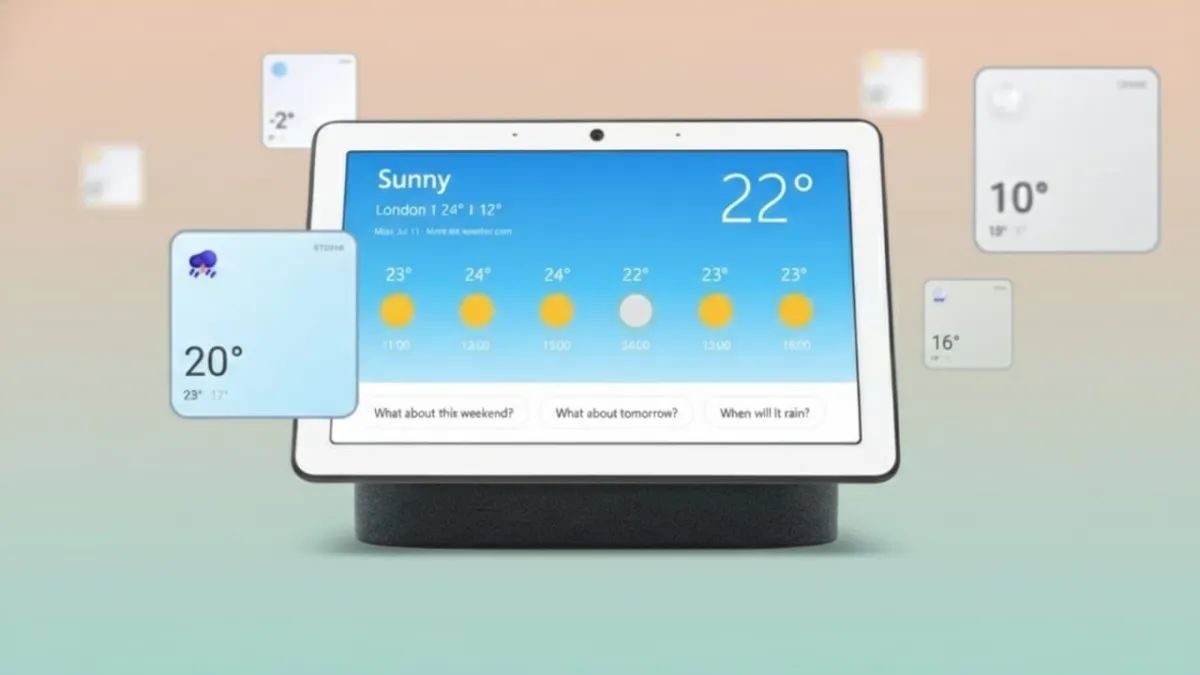
Every day, Google Home displays weather details like temperature, rain, sunshine, or clouds. On smart screens, these appear as clear icons that are easy to understand. Everything looks simple on the surface, but a lot is happening quietly in the background.
Advertisements
Google does not guess the weather on its own. Instead, it brings together data from trusted weather experts, advanced computer models, and real-world observations to give users reliable forecasts.
Also read: How to Remove Fake Apple Security Alerts on iPhone (Safe & Simple Guide)
What Powers Google Home Weather Updates
Google does not directly measure weather conditions. It depends on well-known weather agencies and private forecasting companies that collect data around the world.
These partners gather information using modern tools such as ground stations, satellites, radars, and ocean sensors. Google then processes this data and presents it in a user-friendly way.
Trusted Weather Data Sources
To keep forecasts accurate, Google works with several respected organizations. Some of the most important ones include:
- National Weather Service (United States)
- National Oceanic and Atmospheric Administration (NOAA)
- European Centre for Medium-Range Weather Forecasts
- UK Met Office
- Environment Canada
Google also partners with private companies like AccuWeather and IBM Weather, which have decades of experience in global forecasting.
The exact source used can change depending on your country, region, and device settings.
How Weather Data Is Collected
Weather partners use many instruments to observe the atmosphere:
- Local weather stations in cities and rural areas
- Satellites that track clouds and storms from space
- Radar systems that follow rainfall and storms
- Ocean buoys that monitor sea conditions
- Weather balloons that measure upper-air data
All this information is combined to create detailed forecasts.
The Role of Artificial Intelligence
Google uses advanced AI models developed by Google DeepMind to improve forecasting speed and accuracy.
One of the latest systems is WeatherNext 2, introduced in late 2025. This model can predict weather conditions up to fifteen days in advance. It analyzes temperature, wind, air pressure, and humidity, then generates hundreds of possible outcomes in under a minute.
Unlike traditional forecasting, which relies heavily on physics-based simulations and supercomputers, AI models learn from past weather patterns. They compare historical storms with current conditions to spot similarities and make better predictions.
During major storms and hurricanes, this approach has shown strong results. Government agencies have also started using AI-based forecasting alongside their existing systems.
Google Home also relies on MetNet models, which focus on short-term hourly and daily forecasts. The same data powers Google Search, Pixel Weather, and Gemini.
More Than Just Temperature
Google Home can provide much more than basic weather numbers, but users often need to ask specific questions.
Additional weather details include:
- UV Index – helps estimate sun exposure risk
- Pollen Levels – useful for people with allergies
- Air Quality Index (AQI) – shows pollution levels
Understanding UV, Pollen, and Air Quality Data
The UV index usually ranges from 0 to 11+. It depends on factors like cloud cover, time of day, elevation, and location. Government agencies such as the NWS and EPA publish UV forecasts used by Google.
Pollen information is available in selected countries. It tracks common allergens like grass, ragweed, and mugwort. The data comes from agencies such as the UK Met Office and environmental departments in countries like Japan, France, and Italy.
The Air Quality Index ranges from 0 to 500. Higher numbers mean more harmful air conditions. Pollutants include fine particles and gases like carbon monoxide. AQI data often comes from EPA AirNow and PurpleAir sensors
Common Weather Information Sources at a Glance
| Weather Detail | Main Data Providers |
|---|---|
| Temperature | NWS, NOAA, AccuWeather |
| Forecast Models | DeepMind, MetNet, ECMWF |
| UV Index | NWS, EPA |
| Pollen Levels | UK Met Office, Japan Environment Ministry |
| Air Quality | EPA AirNow, PurpleAir |
Also read: How to Browse the Internet with ChatGPT Atlas: A Simple, Step-by-Step Guide
Final Thoughts
Google Home makes checking the weather quick and convenient by combining AI technology with trusted weather agencies. However, it may not always highlight emergency alerts unless you ask directly. Some details, like wind chill, require specific voice questions.
For best results, allow accurate location access on your device. Privacy limits can reduce forecast precision. During extreme weather, local meteorologists often understand regional risks better, so it’s smart to check more than one source.
Google Home is a helpful tool—but it works best when used alongside other trusted weather updates.

Abhi Rajput, founder of EarnAbhi.in, is a tech lover with 6+ years of experience in SEO, digital tools, and smartphone troubleshooting. He writes simple, clear, and useful guides to help people solve real tech problems.
Advertisements